A great theatre experience depends on more than the performance itself. Audiences need to hear dialogue clearly, see important visual details and remain immersed from the moment they enter the venue until the final curtain.
This is where professional audio visual technology can make a significant difference.
Modern AV solutions allow theatres to combine high-quality audio, lighting, displays, projection and integrated control systems to create more engaging and memorable experiences. The technology should support the performance rather than distract from it, allowing audiences to focus on the story, performers and atmosphere.
For theatres, performing arts centres, school auditoriums and entertainment venues, carefully designed AV technology can also provide greater flexibility for different types of events.
1. Deliver Clear and Consistent Audio
Audio is one of the most important elements of audience engagement.
If someone sitting at the back of a theatre cannot clearly hear dialogue, music or sound effects, their experience can quickly become frustrating. Uneven sound coverage can also mean that some audience members have a very different experience from others.
Professional audio systems can be designed around the size, shape and acoustic characteristics of a theatre. Proper speaker placement, digital signal processing and system tuning can help provide balanced sound coverage throughout the venue.
For theatre productions, this can improve:
- Speech intelligibility
- Music reproduction
- Sound effects
- Audience immersion
- Consistency between seating areas
Noisebox’s documented theatre work includes professionally designed performance sound reinforcement, stage monitoring and microphone systems for a 330-seat performance theatre at Abbotsleigh.
2. Use Lighting to Support the Story
Lighting is not simply about making the stage visible. It can influence where audiences look, establish atmosphere and support changes between scenes.
Modern theatre lighting systems give production teams greater control over brightness, colour, timing and transitions. Programmable lighting can help create different environments without requiring extensive physical changes to the stage.
For example, lighting can help communicate changes in location, time, mood or the emotional direction of a scene.
Professional lighting systems can also be used for concerts, presentations, community events and other productions, making the theatre’s technology more versatile.
3. Create More Immersive Visual Experiences
Audiences increasingly expect strong visual experiences, and theatres can use display and projection technology to expand what can be presented on stage.
High-quality projection systems can display scenic backgrounds, multimedia content, presentations, graphics and live video feeds. Large-format displays can also help audiences see content clearly when projection is not the most appropriate solution.
This can give production teams greater creative flexibility while allowing venues to accommodate different types of events.
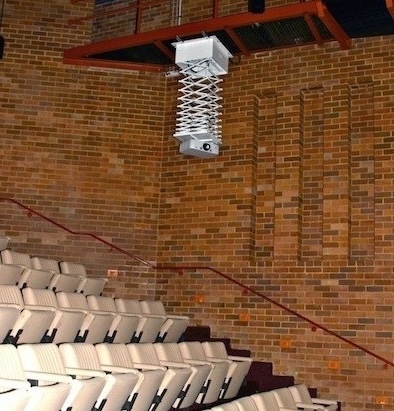
Noisebox’s Abbotsleigh theatre project incorporated three projection systems, including a large 180-inch widescreen projection and additional side displays. The system was designed so the technology could be positioned without interfering with audience sightlines.
4. Make Technology Easier for Theatre Staff to Control
A theatre may have numerous AV components operating simultaneously.
Audio, microphones, projection, displays, cameras and other equipment can become difficult to manage when each system operates independently.
Integrated AV control can simplify this process by allowing multiple systems to be managed from a centralised interface.
This can help production teams:
- Reduce setup complexity
- Change inputs more efficiently
- Control multiple systems from one interface
- Reduce operator errors
- Respond quickly during live events
At the Abbotsleigh theatre, Noisebox integrated the AV components into an AMX control system, with customised touchscreen interfaces and an iPad providing different control options depending on the performance.
The goal is for technology to become easier to operate rather than adding another layer of complexity.
5. Support Different Types of Events
A theatre is rarely used exclusively for traditional stage productions.
The same venue may host school performances, concerts, conferences, corporate presentations, community events, lectures, Q&As or other functions.
Flexible AV infrastructure allows a venue to adapt its technology to different requirements.
For example, a theatre may need a microphone system for a performance one evening and presentation displays or video conferencing capabilities for another event.
Designing AV systems with flexibility in mind can help venues maximise the use of their spaces and potentially reduce the need for temporary equipment changes.
Noisebox’s theatre project at Abbotsleigh was designed to support musical and theatre performances as well as lectures, formal presentations, informal meetings, Q&As and video conferencing events.
6. Improve Audience Accessibility
Audience engagement also depends on making performances accessible to as many people as possible.
Hearing augmentation systems can help venues provide better access for audience members who require additional hearing support. These systems need to be carefully designed around the venue and its audience requirements.
Noisebox has also delivered hearing augmentation solutions for large venues, including a documented stadium project where an RF solution achieved coverage for a 7,000-capacity audience.
Accessibility should therefore be considered as part of the overall AV design rather than treated as an afterthought.
7. Use Cameras and Live Feeds to Extend the Experience
Performance cameras can provide additional viewing options within a theatre.
A camera positioned appropriately can capture the stage and feed the image to another screen or location. This can be useful for overflow areas, backstage monitoring, adjacent spaces or audiences who need an alternative viewing position.
In Noisebox’s Abbotsleigh project, an HD pan-tilt-zoom camera was integrated into the theatre’s AV control system. The venue also included a video feed to a marshalling area and an AV connection to an adjacent theatre.
These capabilities can help theatres make better use of their available spaces.
8. Prioritise Reliability and Maintenance
Even the most sophisticated AV system cannot improve audience engagement if it fails during a performance.
Unexpected microphone failures, display problems, audio faults or control issues can interrupt the audience experience and place additional pressure on production teams.
Regular service and maintenance can help identify potential issues before they become disruptive. This may include equipment inspections, system testing, calibration, firmware updates and preventative servicing.
Noisebox provides ongoing AV service and maintenance as part of its broader AV offering, helping venues maintain reliable system performance.
9. Design AV Around the Theatre, Not Just the Equipment
One of the most important considerations is that there is no single AV solution that works for every theatre.
Room dimensions, seating arrangements, acoustics, sightlines, stage configuration, production requirements and existing infrastructure all influence the design.
Simply purchasing powerful speakers or large displays does not guarantee a better audience experience. The technology needs to be selected, positioned, integrated and configured around the way the venue operates.
Professional AV consultancy can help theatres identify their requirements before equipment is selected.
Noisebox provides AV consultancy, system design, installation, integration and ongoing service and maintenance, allowing venues to approach their AV requirements as a complete system rather than a collection of individual products.
Future-Proofing Theatre AV Technology
Technology and audience expectations continue to evolve. A theatre investing in new AV infrastructure should therefore consider how the system can accommodate future requirements.
Scalable infrastructure can make it easier to upgrade individual components without replacing an entire system. This can help theatres adapt to new production formats, digital content, hybrid events and changing operational requirements.
Future-focused design can also help protect the investment a venue makes in its AV infrastructure.
How Noisebox Can Support Theatre AV Requirements
Noisebox provides professional AV technology solutions for theatres and other performance environments, covering audio systems, lighting systems, display systems, projection systems, AV consultancy and service and maintenance.
From initial consultation and system design through to installation, integration and ongoing support, a professional AV partner can help ensure the technology works together as one cohesive system.
The result is technology that supports performers, production teams and audiences without unnecessarily getting in the way of the performance.
Final Thoughts
So, how can theatres improve audience engagement with AV technology?
The answer involves more than installing new equipment. The most effective approach is to create an integrated AV environment where sound, lighting, visuals, control systems and accessibility work together.
Clear audio helps audiences follow the performance. Lighting supports atmosphere and storytelling. Projection and displays create visual impact, while integrated control makes complex technology easier for production teams to manage.
With professional design, installation and ongoing maintenance, theatres can create reliable and flexible environments that enhance performances and give audiences a more immersive experience.
Frequently Asked Questions
How can AV technology improve audience engagement in theatres?
AV technology can improve audience engagement by providing clear audio, dynamic lighting, high-quality visuals and reliable integrated systems. These technologies help audiences remain immersed in performances while allowing production teams greater creative and operational control.
What AV technology is commonly used in theatres?
Theatres commonly use professional audio systems, microphones, stage lighting, projection systems, LED displays, performance cameras, digital signal processing and integrated AV control systems.
Why is audio quality important in a theatre?
Clear audio ensures audiences can hear dialogue, music and sound effects consistently throughout the venue. A professionally designed audio system can help reduce dead spots, improve speech intelligibility and create a more immersive experience.
Can lighting technology improve a theatre performance?
Yes. Professional lighting can support storytelling by directing attention, establishing atmosphere and creating smooth transitions between scenes. Programmable lighting also gives production teams greater creative flexibility.
How can projection systems improve audience experiences?
Projection systems can display scenic backgrounds, multimedia content, graphics, presentations and live video feeds. High-quality projection can add visual depth to productions while giving theatres greater flexibility for different events.
Why is AV integration important for theatres?
AV integration allows audio, lighting, displays, projection and control systems to work together. This can simplify operation, reduce technical complexity and help production teams manage multiple systems more efficiently.
How often should theatre AV systems be maintained?
Theatre AV systems should be maintained regularly to help identify potential problems before they disrupt performances. Maintenance may include equipment inspections, system testing, calibration, firmware updates and preventative servicing.
Can theatre AV systems support events other than performances?
Yes. Flexible AV systems can support conferences, corporate presentations, school events, lectures, Q&As, community events, concerts and other functions. This allows theatres to make greater use of their spaces.
Why should theatres work with a professional AV company?
A professional AV company can assess the venue’s acoustics, layout, sightlines, infrastructure and operational requirements before designing an appropriate system. This helps ensure the selected technology is integrated effectively and supports reliable day-to-day operation.